

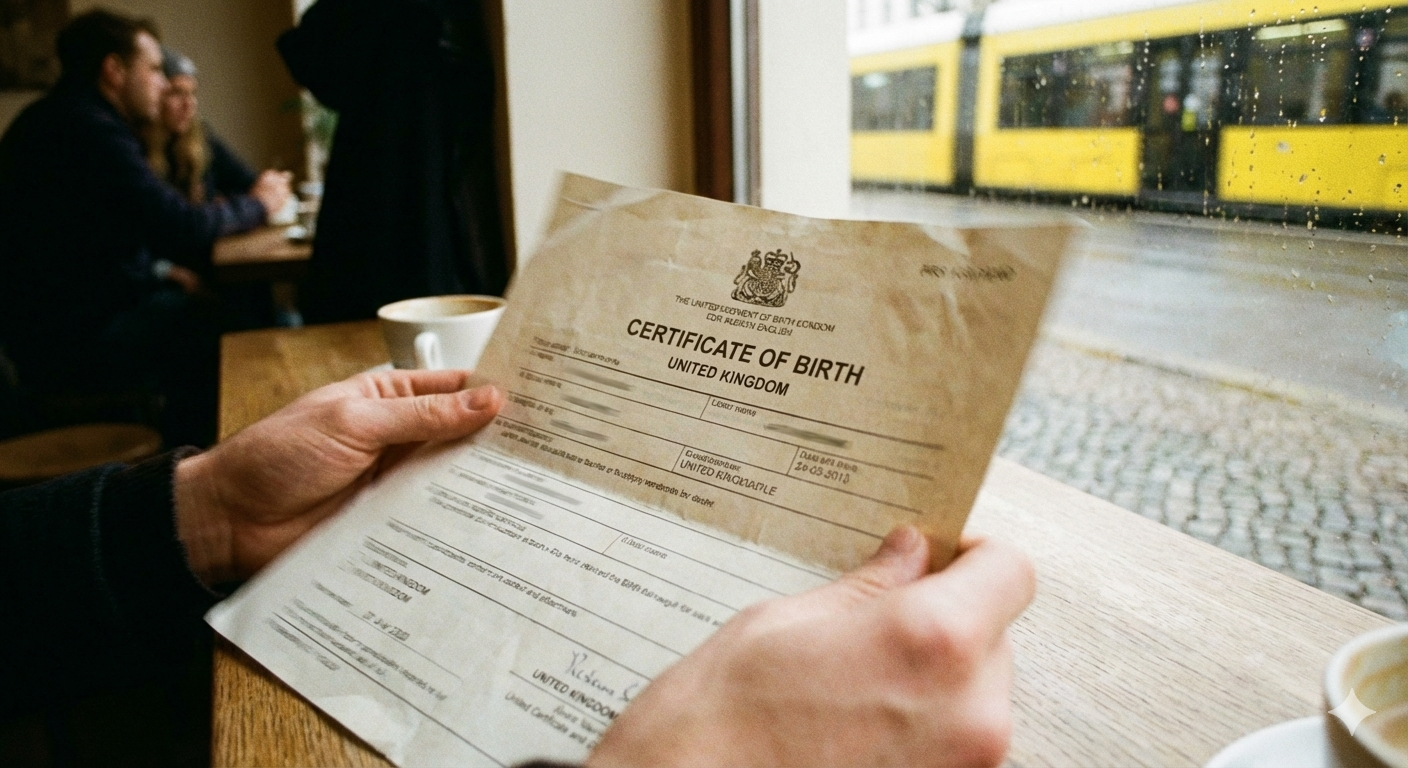
Why This Matters (And Why It’s Actually Complicated)
The birth certificate (Geburtsurkunde / Geburtsattest) is the key document you need to apply for Elterngeld, Kindergeld, health insurance, and more. Without it, nothing moves forward.
For German families, this process is usually straightforward.
For expat families, especially those with foreign documents, this is often where delays, confusion, and stress begin.
Important deadline: You have 3 months after birth to apply for Elterngeld. Miss it, and you lose months of benefits.
Since the birth certificate often takes 2–4 weeks to arrive, timing and preparation matter a lot.
Where You Get the Birth Certificate
If you give birth in a German hospital, the hospital notifies the Standesamt (civil registry office) responsible for the district where the baby was born.
Some hospitals have a Standesamt office inside the building, where you can sometimes submit documents before discharge.
Reality check:
If you give birth on a Friday evening, the Standesamt usually won’t open until Monday. If you’re discharged early Monday morning, you’ll need to go to the Standesamt yourself.
📍 You must go to the Standesamt of the district where your baby was born, not where you live.
The Realistic Timeline (What Usually Happens)
This is what the process often looks like in real life:
- Day 0 (Birth): Baby is born (often Friday evening).
- Days 1–2: Weekend in the hospital.
- Day 3 (Monday): Discharge. Standesamt still closed.
- Days 4–7: You go in person to the Standesamt with all documents.
- Weeks 1–4: Birth certificates are processed and mailed or picked up.
👉 Realistically: expect 2–4 weeks from birth until you have the certificate in hand.

Documents You Need at the Standesamt
Bring originals (and copies if possible):
- Your passport or ID
- Your partner’s passport or ID
- Hospital birth notification (Geburtsanzeige)
- Your birth certificate (with apostille + certified German translation)
- Your partner’s birth certificate (with apostille + certified German translation)
- Marriage certificate (if married), also apostilled and translated if from abroad
- Proof of residence in Berlin (Anmeldung)
⚠️ This is where most expat families get delayed.
German families usually submit their original German certificates. If your documents are from abroad, apostilles and translations can take weeks.
Pro tip:
Order 2–3 extra certified copies of your translated birth certificate. You’ll need them for Elterngeld, Kindergeld, health insurance, and sometimes your employer.
Step-by-Step: What Happens at the Standesamt
- Book an appointment
Look up the Standesamt for the district where your baby was born. Appointments are usually faster than walk-ins. - Submit your documents
The officer checks IDs, birth certificates, marriage certificate, and hospital papers. - Pay the fee
Usually €10–20 for registration and the first certificate. - Receive confirmation
You’ll be told whether certificates are issued immediately or mailed later. - Order extra copies
Extra certificates cost €5–10 each. Order them now, they’re cheaper than ordering later.
A Crucial Issue for Latin American Parents
If you or your partner is from Argentina, Colombia, Mexico, Chile, Peru, or other Latin American countries, read this carefully.
The “Original” Birth Certificate
Problem
In most Latin American countries, there is no single “original” birth certificate.
What citizens receive are certified copies issued by the Civil Registry, and that is the official document.
German Standesämter sometimes ask for “originals,” which causes confusion.
The reality:
Your certified copy is the only legal birth certificate available in your country.
The Solution: An Embassy Letter
If the Standesamt insists on an “original,” you’ll need a letter from your embassy or consulate in Berlin confirming that:
- The document is legally valid in your country
- Birth certificates are issued as certified copies
- No other “original” version exists
⚠️ This embassy letter is separate from:
- Apostille
- Certified German translation
In some cases, you’ll need all three.
Real example:
My husband (Argentina) and I (Colombia) both submitted certified copies. The Standesamt asked for originals. Our embassies issued letters explaining that certified copies are the standard legal documents. The Standesamt accepted them.
Tip:
Contact your Standesamt before your appointment, explain your situation, and ask exactly what they require. This can save weeks.
Translation of Documents
If your documents are not in German, English, or French, you’ll usually need a certified translation (beglaubigte Übersetzung) by a translator registered in Germany.
This almost always applies to:
- Birth certificates
- Marriage certificates
- Divorce documents
How Long Does the Process Take?
- Registration deadline: Birth must be registered within 7 days
- Certificate processing:
- Some Standesämter issue certificates immediately
- Others take 2–4 weeks
- Free certificates:
You usually receive 3 free certificates for:- Elterngeld
- Kindergeld
- Health insurance
👉 Average total time:
If you go in person during the first week, most families receive certificates within 2–4 weeks.
Important for Elterngeld:
If certificates are delayed, ask the Standesamt whether they can issue a provisional confirmation that the Elterngeldstelle may accept.
Which Standesamt Is Responsible?
You must go to the Standesamt of the district where the baby was born.
Examples:
Standesamt Mitte
- Charité Campus Mitte
- Charité Campus Virchow-Klinikum
Standesamt Friedrichshain-Kreuzberg
- Vivantes Klinikum Am Urban
Standesamt Neukölln
- Vivantes Klinikum Neukölln
Standesamt Tempelhof-Schöneberg
- St. Joseph Krankenhaus
- Vivantes Klinikum Mariendorf
Standesamt Pankow
- Helios Klinikum Berlin-Buch
⚠️ Always confirm with your hospital, some are near district borders.
Home Birth: What’s Different?
If your baby was born at home with a midwife:
- The midwife notifies the Standesamt within 7 days
- You still go in person with all documents
- The same deadlines apply
Advantage:
Going in person often means faster certificates than hospital handling.

Common Problems (and How to Solve Them)
“They’re asking for an apostille”
You’ll need to request it from your home country or via your embassy, this can take weeks.
“They want the original” (Latin American parents)
Get the embassy letter explaining that certified copies are the legal standard.
“I haven’t received my certificates”
Contact the Standesamt directly. Sometimes mail is delayed or addresses are incorrect.
“I need the certificate urgently for Elterngeld”
Some Elterngeld offices accept:
- Hospital birth notification
- Provisional confirmation from the Standesamt
Always ask your Elterngeldstelle directly.
Step-by-Step Checklist
Before Birth
- Gather passports, birth certificates, marriage certificate
- Check apostille requirements
- Contact embassy if applicable
- Arrange certified translations
- Research the correct Standesamt
After Birth
- Get the Geburtsanzeige from the hospital
- Book the Standesamt appointment immediately
- Attend appointment with all documents
- Order extra certificates
- Ask when certificates will be ready
What Happens Next?
Once you have the birth certificate, you can:
- Apply for Elterngeld (remember the 3-month deadline)
- Register your baby with health insurance
- Apply for Kindergeld (€250/month)
- Apply for your baby’s passport
The birth certificate is the gateway to all of this. Keep originals safe, make copies, and plan ahead.
Welcome to German bureaucracy, and congratulations on your new baby 💛